
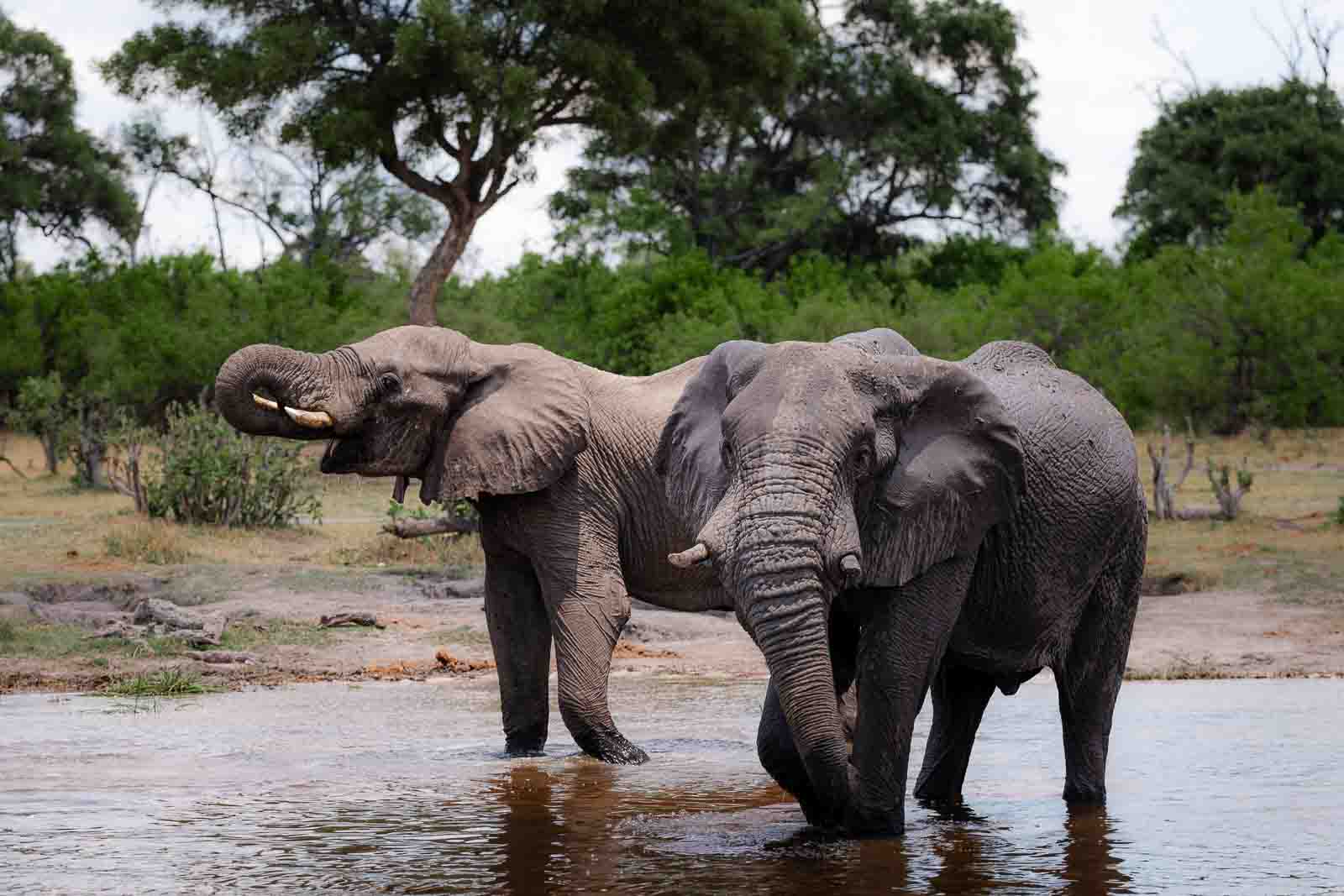
Botswana is a fantastic destination for wildlife lovers and photographers alike. Whether you are looking for a complete 2-week itinerary in Botswana or you want to condense your trip into a shorter 10-day adventure, planning is everything.
Drawing from my own personal experience traveling through this incredible country, I can tell you that a successful safari requires patience, the right gear, and being in the right place at the right time.
This guide is built directly from my own time in the bush and will walk you through the exact routes I took, practical advice for camping, and how to get the most out of your wildlife photography along the way.

Getting there and practical tips for international travelers
If you are flying from the US or Europe, you will typically connect through Johannesburg, South Africa, before flying to Maun or Kasane.
- Currency: While the local currency is the Botswana Pula, USD is widely accepted at major lodges and for tipping.
- Visas: Most US and European citizens do not need a visa for short tourist stays, but always check the latest requirements before your trip.
- Connectivity: Do not expect fast internet. Disconnecting is part of the experience.
Self-driving and camping in Botswana
While a self-drive Botswana itinerary is a highly rewarding way to experience the country, it is certainly not the only way to do it. During my own two weeks in Botswana, I actually traveled with an organized group.
Going with a guided tour meant I could focus entirely on my photography and spotting wildlife, rather than worrying about navigating deep sand tracks or rushing to set up a tent before sunset.
That said, there are plenty of options depending on your comfort level. Renting a fully equipped 4×4 allows you to explore at your own pace and gives you complete freedom over your daily schedule. Just know that if you are planning on wild camping in Botswana, you need to be entirely self-sufficient. You must bring all your own water, food, recovery gear, and emergency supplies, as facilities are virtually nonexistent in the deep bush.
Finding the best places to stay in Botswana can also be challenging if you are traveling solo. It often means booking remote campsites in national parks many months in advance. One of the main benefits of my organized group trip was that all these permits and bookings were handled for us, taking a massive load off the planning process.
Whether you choose a guided overland tour or a solo self-drive adventure, spending your nights in a rooftop tent under the African stars is an unforgettable experience.
My 2-week Botswana itinerary
Day 1: Getting to Botswana.
It’s an early morning: one of the many to come. At 5:30 am, I get out of bed and prepare myself for the two weeks to come. I returned everything I needed from the past couple of days into my bags and freshened up.
At 6:00 am, we are all expected at the breakfast table, so we can get our tummies filled and hit the road at 6:30 am sharp. Something we did with ease. It looks like it’s a group of early birds!
The first stop is Zeerust in South Africa. A small village where we do some shopping for the coming days. Food, drinks, and alcoholic beverages. Everything we might need. I select beers I haven’t tried before and put them in the cooler in our truck.
Border control at Skilpadshek

An hour later, we arrive at the Skilpadshek border control. We check out of South Africa and into Botswana. It’s good to know that this can take a long time. It can get busy at the border, and they check your vehicle for illegal things like meat and vegetables. We were lucky and got through it in less than thirty minutes.
After all this, we got hungry. So we stopped in Jwaneng and had lunch at the local Nando’s. Not very local, I know, but sometimes you don’t have to be too picky.
Sleeping at the Kalahari Rest, Botswana
At around 5 pm, we arrived at a place called Kalahari Rest. A camping spot with a nice restaurant in it. Some of us set up the tents, while my sister and I decided to just put up a stretcher and sleep under the stars.
There are no animals there except for some wildebeest and impala. But they’re too shy to enter our camp anyway.
After our preparations for the night, we roam around a bit. We see an impala near the camp, observe a small army of ants digging out a new nest, and watch the sun go down.
Sundown means dinner on this trip. So at 7 pm, we all sit at the restaurant and receive our food. I had the Safari Burger. It’s lovely meat with an egg on top. Delicious!
After chatting up at the campfire, we decide to hit the hay as tomorrow is another day of adventure: a lovely first night in Botswana.
Day 2: First game sightings, Bushmen, and giant insects
In the morning, at 7 am, I put my stretcher back in the truck and had the first breakfast out of the truck. I instantly reconnected with all the products since they were the same as the ones we had on our Namibia trip three years earlier. (Gotta love rusks!)
At 7:50 am, we are all packed and sitting in the truck, ready to go for another day. Before leaving the campsite, we saw some springbok and a family of Ostriches with their babies. A lot of babies!
By noon, we arrived at our campsite at Dqae Qare. It was a bumpy road, perfect for those African massages. Luckily, we were treated to kudu and impala during the drive. To ease the discomfort a bit.
Relaxation and culture
After lunch, we had some time to spare. Since they had a lovely swimming pool and the temperatures were scorching, we decided to cool off.
At the swimming pool, we talked to each other. And I saw some incredible insects. Unfortunately, I didn’t have my macro lens with me at that moment. So I must go back one day to photograph the giant potter wasp and velvet ant.

Then, once we had cooled down, the San, as they are called, guided us through nature on the domain. Showing the ways they craft their equipment from natural resources, what plants they like to eat, how they heal the sick, and so much more.
Of course, the highlight was when they created fire with only a stick and some dry grass. It only took them a minute, too!
Walking around for an hour and a half, talking about the food we could find, made us hungry. So we went back to the truck and had our dinner. Another campfire moment with beers (Castle and Hansa lager). That night, everyone slept under the stars.


Day 3: Going deep into the Okavango Delta, Botswana
Waking up before the sun is up hurts. At 4:30 am, we found ourselves packing up our stuff. We had to do a bit of driving and needed to arrive on time. So an early start was essential.
There was a bit of time to see the sunrise during our departure, though. And it did rise. A hot, glowing ball of fire moving away from the horizon. I saw it moving, something I never experienced before.
During the morning drive to our next stop, Swarm Stop near Sepopa, we saw plenty of wildlife: Wildebeest, Impala, white-backed vultures feeding on a horse, and a warthog.
We also passed the first mouth-and-claw disease checkpoint (one of many). The thing here is to drive your car through a puddle of disinfectant and clean your shoes on one of their disinfected ‘doormats.’

Taking the boat to Peperi Island

On our arrival at Swamp Stop, we had lunch and some cool drinks. Then we all boarded a little boat and left the mainland. Going deep into the Okavango Delta to our island, Peperi Island.
A three-hour trip by boat. It takes so long because you have to stop for all these amazing animals: tonnes of birds, hippos, crocodiles, the African fish eagle, and elephants.
At around 6 pm, we finally got to our little island in the delta. The crew was singing to welcome us warmly. We instantly noticed a rare gazelle near the camp too: a Sitatunga. However, I don’t have any photos of it.
Then it was time for dinner, a briefing on the animals that could enter the campsite at night, and what to do when they did.
Lions, elephants, and hippos. Precisely the kind of animal you want to encounter while going for a quick wee. Right?
Day 4: Close encounters of the absurd kind
Waking up was right at sunrise. When the animals get quiet again, they usually leave your camp, queue to wake up, have breakfast, and start the day.
That day, we were doing two safari walks. One in the morning and one in the evening. With a siesta at noon to hide from the heat. Because in Botswana, it can get hot!
The guide taught us a lot about animal tracks and how to read them in the first hour or so. The poo animals leave behind, and what it can tell you about the animal, is an exciting experience.

We suddenly had to run when we arrived at Mukuro’s, a small kano-type boat that would bring us to another island to spot animals. The spotter tasked with our safety instructed us to run to where we had just come from.
I look back at where we were heading and see a big, dark blob charging us. We stumbled into the pathway of a male hippo. They look cuddly in photos, but they cause the most deaths by animals.
Luckily, the guides are very experienced and brought us to safety. It was scary at first, but it soon became a nice story. No one got hurt, and the hippo quickly lost interest in us.
Stepping into the mokoro and floating on the canals made by the hippos right after that experience wasn’t comforting. But hey, how many encounters can you have?
Luckily for us, we didn’t see any more hippos that day. We tracked two male lions but soon lost interest when we saw elephants nearby. So we went to check them out from a safe distance.

The sun was becoming too hot for us, so we decided to head back to camp and relax. Satisfied with our experiences.
The tracks we saw were those of lion, elephant, hyena, hippo, water monitor, and baboon.
Evening walk with the animals of Botswana
Around 5:30 pm, we went on another game walk. Again, not long after leaving, we noticed elephant tracks. Mainly poop. Soon after, we had to run again. Luckily, this time it was more of a run to hide us than a run-for-your-life situation.
After some reconsideration by the guide, he decided we should go around the elephants (and a baby) so we would be downwind. We saw a warthog and her babies hiding under a bush during our trek in a wide bow around the mastodons. The warthogs ran away as soon as they noticed us.
We walked farther after watching the elephants move away into the distance. We found the tusks of a, presumably, dead warthog. Later, a green bush snake slithered in between the feet of some group members.

After all those adventures, we had a lovely braai to fill our tummies with nice food. One of the group had his 60th birthday. As a fan of Drifters (the tour organizer) and a longtime customer, he was honored to become one of the honorary guides.
Afterward, a campfire for beers, stories, and games. Oh, right, and avoid scorpions roaming around. The first wild scorpions I saw in my life. They’re funny little creatures. Just stay clear of their stingers.
Large claws mean a harmless stinger.
Small claws mean a nasty, bad stinger.
Day 5: Adventures at the campsite
At 6 am, everyone gathered for breakfast again. My sister and I decided not to go on the walks. The adrenaline rushes, followed by a long period of nothingness, are bad for my mood. She didn’t like the continuous tension. A couple of others stayed in the camp too for various reasons. A hangover is one of them.

Luckily, the campsite wasn’t without adventures either. A troop of baboons entered the campsite and tried to steal from our kitchen. Too bad for them, I was hanging around there. They can be very dangerous in the city, but these ones aren’t used to humans.
I had a lot of fun popping through windows and doors and seeing their panicky reaction. An hour later, they learned there was no food to steal, and they left again.
Right in time for me to see a large flock of fruit bats fly into the camp and nest in the trees above our tents. As soon as they landed, I lost sight of them. One of the people staying at the camp was a good spotter and helped me find them during the siesta.
Upon the group’s arrival, I learned that I had not missed anything worth mentioning. Perfect for preparing me for the thing I was looking forward to doing. A helicopter flight over the Okavango Delta.

From the sky and waters

At 1 pm, the helicopter landed on an open spot a little bit outside of the camp. My sister, another group member, and I jumped in, and we left the solid ground for half an hour.
For added visibility, the helicopter’s doors were removed.
We had a nice view of the landscape and the animals in the Okavango Delta from the sky. Elephants and hippo roaming in the water, warthog running around, herds of cows, crocodile resting on little sandbanks, the sitatunga again, red lechwe, and the mighty baobabs.

It was a lot to take in. Thirty minutes seems short, but it’s enough time to look at all the animals.
After another short break, we all hopped in the boat again. The last safari in the Okavango Delta: a boat safari. The guide knew of a place where, usually, there are plenty of buffalo. Unfortunately, we didn’t see any.

Good thing we saw plenty of other animals. We got (too) close to a hippo, saw elephants from nearby, saw the soaring African fish eagle, red lechwe, (baby) crocodiles, black shoulder kites, and waterbuck.
The guide was annoyed because he felt he was failing. After all, we didn’t see any lion or buffalo, but I was happy with all the animals we did see.


When we returned, dinner was ready, and we all ate some nice food. We gathered around the campfire again and then went off to bed.
Later that night, I woke up to the sound of lions roaring. It was in the distance, but I was afraid enough to stay in bed while I needed to pee. Good thing I had an empty water bottle.
This is a pro tip for people who are scared of possible animal encounters at night and have a small bladder. Take one of your empty 5L water bottles into the tent. This is a nice bush toilet you can close off and empty in the morning. I did it, no shame!
Day 6: Another day of traveling
After breakfast, we left the island. At around 6:30 am, we hopped into the boat and hit the small and large channels again. We encountered more elephants, rushed over a hippo pod blocking the way, and saw a crocodile clinging to a dead cow in the water.


At 9:30, we arrived at Swarm Stop again. We loaded our bags into the truck and left for Maun, a large city in the center of Botswana. On the road, nothing spectacular happened.
In Maun, we shopped for food and drinks again and then went to the Green Fire Lodge of Maun. We all had tents again, but this time with a real bed. Heaven!
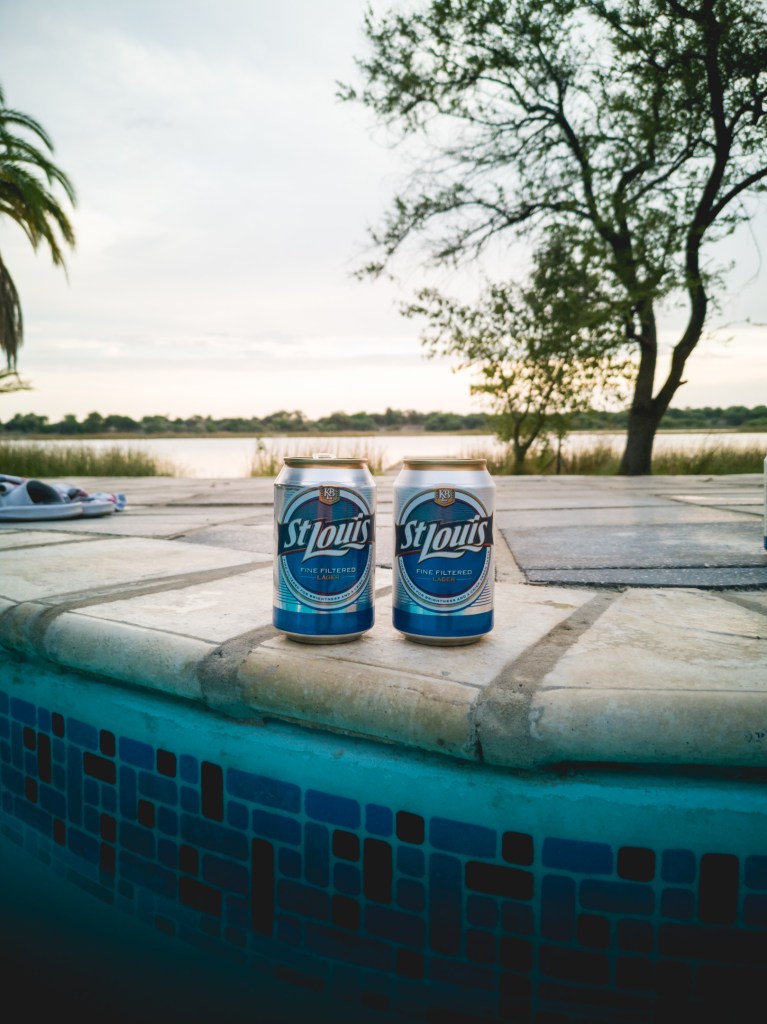
After installing myself a bit, I jumped into the swimming pool. Cool beer on the side. Some wifi to text my girlfriend about all the adventures I had. Share my hippo story with some friends. And then enjoy the sunset before we have a meal cooked in an actual kitchen.
Day 7: Time for the real animal deal
The next day, we had a ‘late’ breakfast at 7:30 am and left another hour later. First, some more shopping in Maun and then off to the South Gate. Gate to where? To Moremi Game Reserve.
In Moremi, we would stay two nights, camping in the wild among the animals. On the road to the campsite, we already encountered plenty of animals.
- Arrow-marked babbler
- Yellow-Billed Hornbill
- Impala: also little ones!
- Elephant: and lots of them.
- Giraf: Not a lot, but they were present.
- Kudu: I love the horns on the males.
- Steenbok: So many again
- Warthog: tails up and running fast.
- Cheetah: Three of them roamed the open spots
- Leopard: hiding in a bush, just 3m from me
- African buffalo: a small herd plowing through the mud
- Hyena: It was far away, but a hyena
- Jackal: He warned us about the leopard; thank you, little guy
- Lechwe: I mean, they’re everywhere!
- Hippo: It was more comfortable to see them from the safety of a car
- Wildebeest: Still angry about that Mufasa thingy.
- Baboon: Some troops with babies; it’s super cute!
- Zebra: They were a surprise, but I was happy seeing them.
- Banded mongoose: cute little ones.


At around 6:30 pm, we arrived at our camp. Some of the helpers had arrived there before us and had set up the tents and toilets. I was ready for bed after dinner, a briefing, and using the toilet.
Well, first warning: the guides about eyes I saw looking at me while I was on the toilet. I saw the light reflecting. It turned out to be a group of Impalas using us as a shield against predators. I don’t know if it worked out for them.
Day 8: Game drive and more game drive
The entire day was spent driving around, except for a short break from 11:30 am to 4 pm. The day’s highlight was a group of wild dogs ripping apart a baby impala. Watch out for graphic photos.
A list of the animals we saw:
Gnu/wildebeest - Elephant
- Wild dog ripping a baby impala
- Hyena
- Kudu
- Impala
- Lechwe
- Leopard
- Baboon
- Vervet monkey
- Marabou stork
- Pelican
At 7 pm, we returned to the camp and had dinner by the campfire. The guides told us a few stories, and we talked some more. For me, it was bedtime at around 9 pm.
At night, I woke up from movement behind the tents. A hyena was brave enough to come close and bite one of our water containers. Too bad for him; he failed.


Day 9: The animal everyone was hoping for…
Another morning in the wild. Today we moved camp from Moremi to Savuti. Another region is the Chobe National Park. We headed from camp to North Gate. There, we checked out of Moremi and headed our way to Savuti. Another part of Botswana’s most beautiful region: Chobe National Park.
On the way out, we saw many animals, like the trip’s first lions. Just lying there under a bush. The lazy guys!
A complete list of animals we saw before noon:

- Lion
- Chacma baboon
- Hippo
- Elephant
- Giraffe
- Warthog
- Zebra
- Kudu
- Sable antelope
- African buffalo
- Gnu/wildebeest
- Waterbuck
- Tsessebe
- Springbok
- Red lechwe
- Impala
- Reedbuck
- Southern ground hornbill
- Grey heron
- Marabou stork
We took a lunch break in the wild right after we saw the lions. I wasn’t comfortable, because it wasn’t that far. After a nice lunch, we continued our drive in the wild. And we saw even more animals.

- Lion
- Black-backed Jackal
- Elephant
- Giraffe
- Hippo
- Warthog
- Zebra
- Kudu
- Roan antelope
- Sable antelope
- Buffalo
- Tsessebe
- Red lechwe
- Impala
- Yellow Mongoose
- Kori Bustard
- Northern black korhaan
- Ostrich
- Southern yellow-billed hornbill
- Secretary bird
- Pearl-spotted owlet
At around 6:30 pm, we finally arrived at the camp. Our guides were kind enough to go ahead and set it up for us again.
We had dinner again, another circle around the campfire, and then to bed.
Day 10: A day of younglings in Botswana

Another day in Chobe National Park, Botswana. In Savuti, to be precise. At 6 am, the game drive started again. We spotted an elephant carcass the day before, so our guide safely assumed we would see some animals gather there.
And right he was. At the carcass, we found a pride of lions feasting on the meat. A male overlooking the scene, some mothers eating, some mothers napping, and cubs going all over the place.
We also spotted many elephants later on. One had climbed a hillside, which even surprised our guide. We discovered a giant herd of more than 50 elephants at a pool. Little ones, too. It was so cute and impressive to see!

We saw some more animals on the morning game drive in Savuti.
- Jackal
- Giraffe
- Warthog
- Zebra
- Kudu
- Gnu/wildebeest
- Tsessebe
- Reedbuck
- Steenbok
- Yellow Mongoose
- Kori Bustard
- Black-bellied bustard
We had a siesta and a speedy shower in the afternoon under the trees.
At 4 pm, we left the camp again. Luckily, we found a female leopard sleeping just next to a bush. We had an obvious view of her, making it a pleasant experience.

Our guide knew about a hyena den not too far from the camp. There we would wait until the mother returned and greeted the little ones. For a minute, we discussed with another car that claimed there were no hyenas there anymore. Our patience was rewarded, as they did live in the den. Cute hyena puppies greeting their mom.
It was getting late again, so we had to return to camp: another dinner around the campfire and off to bed. The next day, we would have to go back to Maun.

Day 11: Roads, roads, and roadkill

At 6 pm, we departed camp again. Heading for Mababe gate. We had some rain the day before, so the road wasn’t in perfect condition. And we didn’t see many animals during the drive.
After some driving, we arrived at the Mababe gate, leaving Savuti. A bit outside the camp, we saw an impala that was hit by a car. A bit further, an aardvark as well. It was the first aardvark I had ever seen, so it was sad to see it lying on its back, bloodied.
Another veterinary control point where we disinfected our shoes and tires before arriving at Maun again was Botswana’s touristic capital. We bought some more food and drinks there and headed back to the Greenfire Lodge.
I spent the whole afternoon swimming in the pool and relaxing. I did take some time to focus on photographing the insects. But since I don’t know the local ones, it was hard to get good pictures.
After dinner, we played the impala drinking game, but I went to bed pretty early since I wasn’t feeling too well.
Day 12: Saltpans and thunderstorms

The next day was pretty relaxed. We had plenty of time to reach our next destination: The Makgadikgadi saltpans. So, I spent the morning in the swimming pool again. Does it show I love water a lot?
We had a late breakfast and then lunch before we left. From 12:30 pm to 4:30 pm, we spent driving. It could have been faster, but we had to take a couple of breaks since I became carsick out of nowhere.

Once we arrived at One Tree Island in the Makgadikgadi salt pans, I started to feel better again. We took some group photos and then had dinner. The guides made some of the best fried chicken I’ve ever had.
After lunch, when we sat around the campfire, we noticed the horizon filled with lightning bolts: one after the other. I don’t think I ever saw so many lightning bolts. This was probably the most memorable night of my stay in Botswana.

At first, we decided to sleep under the stars. After a while, the stars disappeared behind the clouds. The lightning didn’t come close, though. But the rain did. So at midnight, we decided to put up our tents.
Day 13: Bye-bye Botswana
After a short night’s rest, we had to get up again. At 5 am, we started packing and eating some breakfast. The first part of the road was bumpy again, but we soon hit paved roads again.
On the road, we witnessed an elephant mother and baby separated. The mother got over a fence, and the little one was still too small to do it. So the mother tried to explain how, but the little one panicked. We had to continue, but our guide told us they always find a way to solve this problem.
By lunch, we arrived in Kasane at the northern border of Botswana. We had lunch on a rather large boat. While we ate, the captain left the shore and started our cruise on the Chobe River. We technically didn’t cross the border, but I still feel we revisited Namibia.
Fun fact: Botswana and Zambia share one of the shortest borders in the world, measuring only 150 meters in length.
Discover more Botswana Fun Facts: 27 fun facts about Botswana


We got close to some hippos, crocodiles, buffalo, and waterbuck during the cruise.
At 2 pm, we arrived at the border with Zimbabwe. It didn’t take too long for us to go through customs. Plus, the guard made it a pleasant experience. Asking us about Lukaku and the languages spoken in Belgium.
Bye-bye, Botswana!
Another two hours later, we arrived at the Greenfire lodge in Victoria Falls. This was the last stop on the trip for my sister and me. We booked an extra day in the city while the other hit the road to Johannesburg two days later. But it’s not the end of the trip yet.
After the cook’s dinner, we had a short briefing and were requested to go to the breakfast hall. Wild Horizons’ people explained everything about Victoria Falls and the activities we could do there. My sister and I booked our days as full as possible.
After booking, we headed to the lodge bar and drank the local Zambezi beer. I can recommend this one!
Day 14: I’m regretting this decision

At 7:30 am, my sister, another group member, and I were picked up for our first activity: white water rafting on the Zambezi River. The bus picked up other passengers at various local lodges and hotels and took us to a bar.
There, we started the safety instructions. While they explained all the hazards we may encounter and how to react, I was a bit afraid. It all sounded so serious and dangerous. I did my best to keep myself together and get through the day.
We then hopped into one of the boats and started practicing. Seven participants and a guide. It was a funny guide. He gave good instructions, made good jokes, and made it an enjoyable experience. He was also very comforting.
That day, we did 19 rapids from level 1 to level 5. The one level 6, named Commercial Suicide, we skipped. The name can tell you why.
All in all, we had a good go. After the first three or four rapids, I felt confident. I can even say I had a lot of fun. We jumped into the water at a certain point and just went with the current for a bit. It was a nice cool down.
We only flipped the boat once. At Oblivion, where 9 out of 10 boats flip, we turned the boat around, and all landed in the water. The first few seconds I was underwater were a bit scary, but I remembered our guide’s instructions: sit it out, the lifejacket brings you back up in 10 seconds.
So I did, and as promised, I resurfaced soon enough. The rest of the group was already some distance downstream. They even already flipped the boat back to its normal position. Along the way, I found the Dutch woman I met earlier. She was panicking a bit and was uncomfortable with the situation. I decided to hang around her and have a chat. I enjoyed the swim.
Upon arriving at the boat, we did the last rapid, which was only level 1, and then stopped the tour. We climbed back up to the top of the gorge. The climb is exhausting; luckily, they have a nice lunch prepared for you at the top. With some nice cold drinks. A perfect end to an adventurous trip.
In the evening, starting at 4 pm, we did a sundowner boat cruise. It’s this bigger boat going up the Zambezi River, looking for animals while you enjoy an all-inclusive bar. Not a bad deal at all.
Afterward, we had a final dinner with the entire group at the Three Monkeys restaurant in the city center: a nice place to enjoy local meats and other dishes. The service there is polite and kind, and the food arrives quickly.
We all had drinks together, then ended our nights in different ways. I just went to the lodge to enjoy peace and a beer.
Day 15: Goodbyes and spa day

In the morning, we all woke up early again. The group had to drive back to Johannesburg via Francistown to catch their flights. My sister and I booked an extra day in Victoria Falls and would fly home from there.
After a lovely breakfast and hugs, the truck left us. My sister and I went to sit near the pool and relax a bit. At 10 am, we had a pick-up to bring us to the spa. I had a massage, and my sister enjoyed a pedicure.
We then left for Victoria Falls Park. We had lunch at the Rainforest Café first. It’s a great place to enjoy good coffee and a nice hamburger.
If the 108m drop doesn’t kill me, my mother definitely will. #VictoriaFalls pic.twitter.com/LlgguY6thk
— Fredography 📸 (@FredPaulussen) December 1, 2018
Then we had our first actual view of Victoria Falls. Seeing all the water going over the cliffs and falling 100m lower is awesome.
After our walk through the park, we headed to the pickup point to visit Livingstone Island. After a short walk through customs, we were in Zambia, home of Livingstone.

A very short boat ride and some instructions led us to the Devil’s Pool. There you can sit on the edge of the waterfalls. Looking down 100m while the water washes over you. It’s an incredible experience I can only recommend.
We had high tea on the island and then returned to our lodge. We finished our trip and got ready for bed. The next day was filled with traveling back home from Vic Falls to Joburg, Paris, Brussels, Antwerp, and bed again.
Wildlife photography tips for your safari
Shooting in the bush requires a different approach than my usual street photography in the city. Over my trips to Botswana and South Africa, I have learned a few hard lessons about shooting in these environments.
- Bring multiple camera bodies: The dust in the African bush is relentless. Having multiple camera bodies so you do not have to change lenses on dusty dirt roads is the best way to protect your gear and never miss a moment. Ideally, you want a 24-70mm or 70-200mm on one body and a long telephoto, such as a 100-400mm or 150-600mm, on another.
- Master your camera settings: Wildlife moves unpredictably, so use a fast shutter speed of at least 1/1000s or faster for moving animals or birds in flight. Switch your camera to continuous autofocus (or even 3D if your camera has it), which lets it track the animal as it moves through the frame. For aperture, shoot wide open at f/2.8 or f/4 to isolate your subject against a blurry background, but if you want an entire herd of elephants in focus, stop down to f/8 or f/11.
- Avoid the midday sun: The light in southern Africa is intense, and the midday sun creates harsh shadows that are very unflattering for wildlife portraits. Use the middle of the day to rest or travel between camps. Focus your intensive photography efforts on the golden hours just after sunrise and right before sunset, as the soft, warm light will make your images look far more professional.
- Be patient at the water: Instead of constantly driving around looking for action, sometimes the best strategy is to park near a watering hole or riverbank and just wait. Turn off your engine, get your camera ready, and observe. Animals will eventually come to drink, and you will have the perfect stable setup to capture them in a natural environment.
- Zoom out for context: It is easy to get tunnel vision and zoom in as far as possible to capture a tight headshot of a lion or an elephant. While those shots are great, do not forget to zoom out. Showing the animal within its habitat tells a much stronger story.
Brilliant diary, and some great advice for my trip to Chobe and the Falls next year