
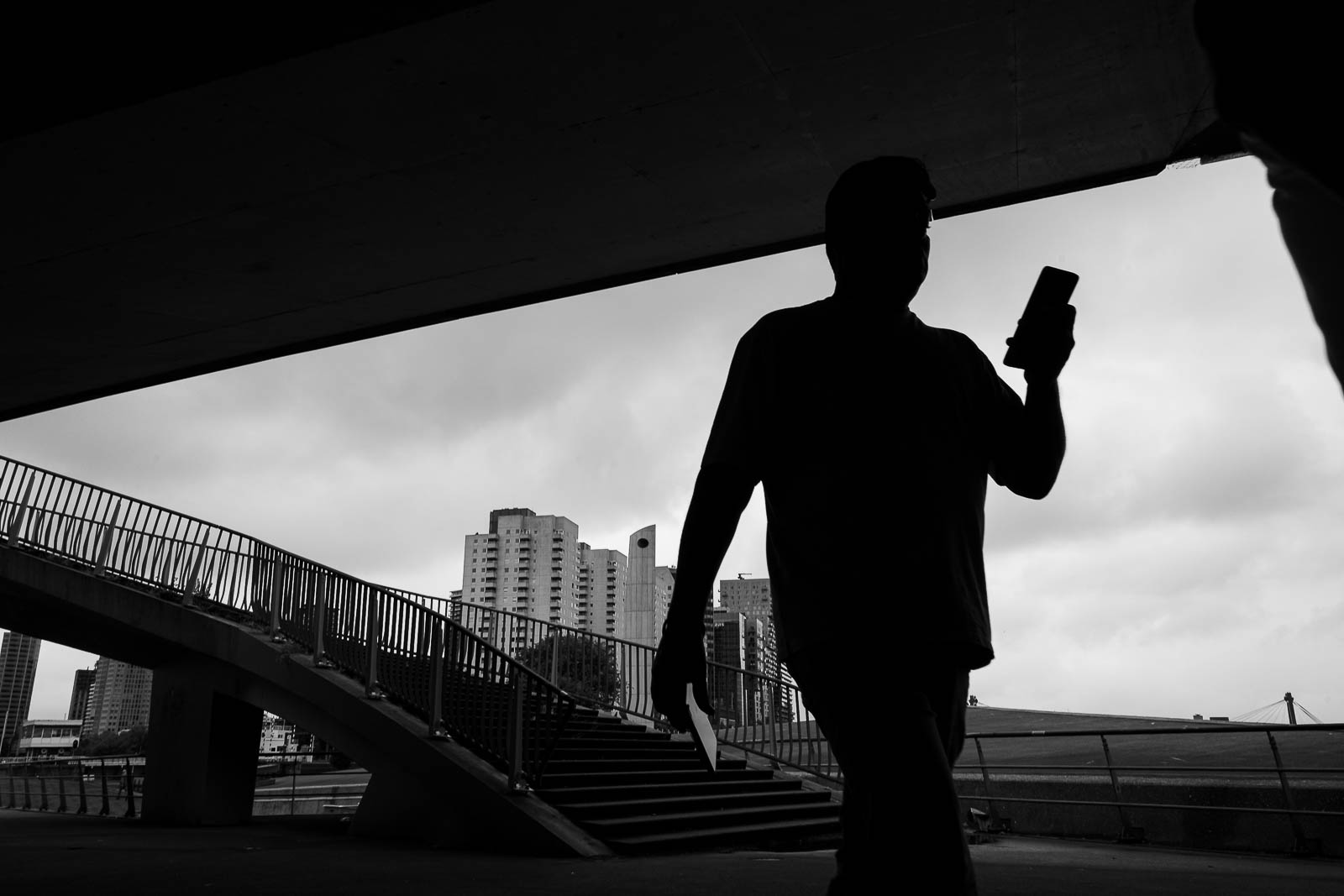
There are many ways to improve your street photography. You can enhance your subject choice and your compositions. One of the composition techniques I like to use for this is Frame-in-frame, also known as sub-framing.
Frame-in-frame is the technique of adding another frame within the four borders of your photo, creating a frame within your existing frame.
This extra frame can be made of anything you can think of or find. But more on that below
Why frame-in-frame is useful
Now, why would you add more to your frame? Isn’t composition also leaving out-of-frame elements that aren’t important? Well, yes, but subframing can help you with that.
Cleaning up a scene
By adding a clean-looking foreground to your scene, you can hide ugly bits and pieces, putting the focus more on your subject.
Crowds are messy, and it isn’t always easy to put the attention in your photo on that one subject you would like people to look at. By simply adding a frame —for example, by shooting between people in front of you —you can clean up that mess.

Adding depth to your photo
Adding an element to the foreground gives your image more visual depth. Ofcourse, you can also look for a background that frames your subject. But usually shooting through something is the way to go.

Adding extra color and texture
Shooting through something colorful or rich in texture can also add interest to your photo. A colorful object can add extra interest to your composition. Finding the right color that’s complementary to your subject is, ofcourse, not easy, but when you achieve it, it gives you such an incredible feeling of satisfaction.

Place your simple subject in a more complex composition.
Sometimes you find a subject in a rather uninspiring environment. By looking around to see if you can just shoot through something, you can already provide an extra interest to your shot.
With a foreground frame, you can make the most boring concrete backdrop more interesting.

Make the scene more abstract.
By adding a foreground for your subframing, you can also subtract elements that might tell too much. Cut off limbs (with your frame, not in any other way), hide aspects of your subject that might be too telling.

How to find a frame-in-frame
Knowing how and why to use subframing is a good start, but ofcourse you also need to find those opportunities. There are two main strategies to achieve a good frame-in-frame in your street photography.
Start with a subject first, aka hunting
Look for something or someone that interests you and want to photograph. You take some shots, like always, to be safe. Then start looking around. Is there somewhere you can use to shoot through? Anything you can hold in front of the camera to make the frame more interesting?
Find somewhere to shoot through., aka fishing
You can also work the other way around. Find somewhere to shoot through. For example, a set of bicycles, a road fence, … whatever you think looks nice as a frame in your frame. And then you sit and wait for an interesting subject to pass.
Neither of these techniques is better than the other. It’s what works best for you. I do both, depending on whether I see a subject or a frame first.
Objects to use for frame-in-frame in your street photography
There are so many possibilities. They are actually endless, but to help you start with this technique, there are several possibilities I wanted to give you already:
Roadsigns, bike frames, bike wheels, garbage bags, between people, through people’s legs, through plants, using light pockets in the streets, using fences, using actual windowframes, using mirrors on the roads, using archways, using holes in advertising boards, using phonebooths, holes in walls, between pillars, through tunnels, through dirty windows, …
Photos by street photographers to inspire your sub-framing
My street photographs to inspire your frame-in-frame compositions


4 thoughts on “Using frame-in-frame to improve your street photography”