
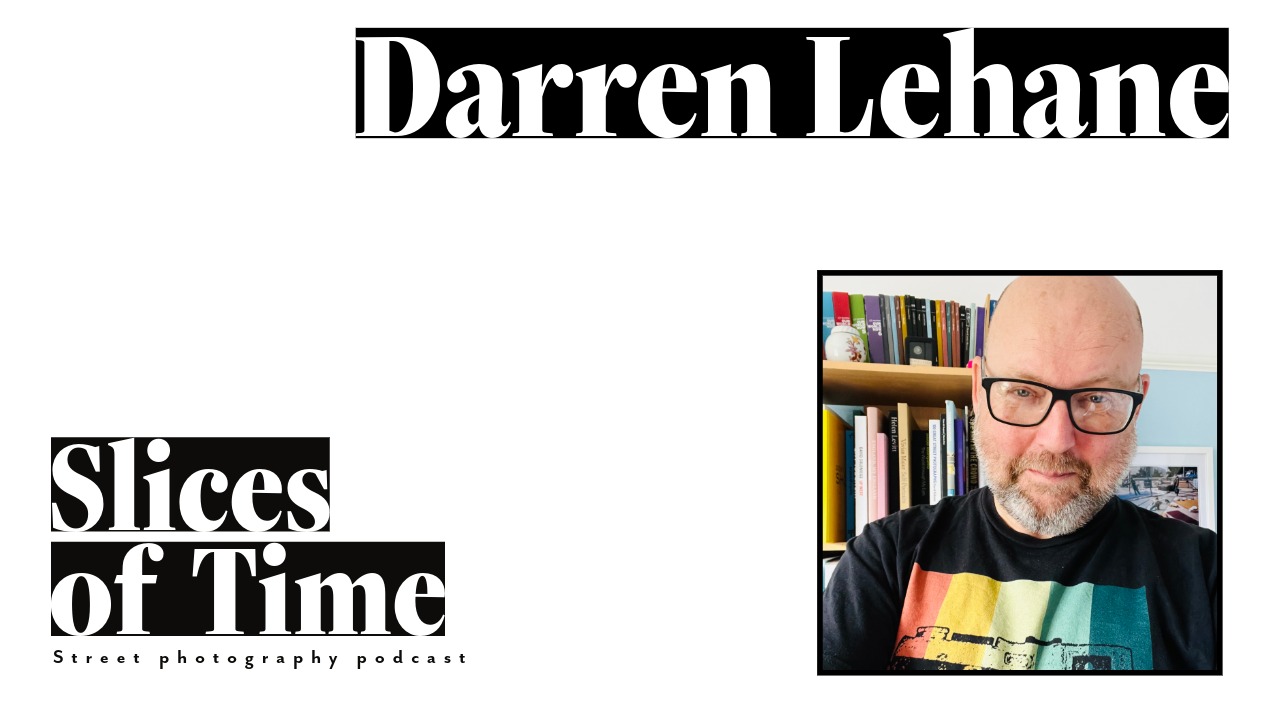
Today, I’m joined by Darren Lehane, a street photographer from Bristol, the UK. His work stood out to me because his photos are hilarious.
Follow Darren Lehane
- Website: https://thatdarrenlehane.uk/
- Instagram: https://www.instagram.com/thatdarrenlehane
Listen to the episodes on:
You can follow me on several social media for updates about the episodes:
- BlueSky: https://bsky.app/profile/fredpaulussen.bsky.social
- Instagram: https://www.instagram.com/fredpaulussen/
- My website: www.fredericpaulussen.be
Timestamps of this episode with Darren Lehane
00:00 Introduction to Street Photography and Darren Lehane
03:53 The Challenges of Modern Street Photography
09:59 Anticipating Moments in Street Photography
11:15 Building a Body of Work
13:15 Monthly and Annual Reviews of Work
16:15 The Pressure of Publishing and Social Media
19:32 The Significance of Street Photography
21:39 Influence of Street Photography on Wedding Photography
23:00 Capturing Authentic Moments at Weddings
24:54 Exploring Analog Photography
27:41 The Appeal of Small Cameras and Snapshot Photography
29:53 Attraction to Humor in Street Photography
30:16 The Influence of Humor in Street Photography
32:59 The Dynamics of Shooting Alone vs. with Others
36:21 Being in the Scene: The Essence of Street Photography
39:03 Creativity and Personal Expression in Photography
42:05 The Artist’s Identity: Balancing Self-Perception and Public Perception
44:10 Personal Connection: The Photographer’s Perspective
45:06 Navigating Confrontations in Street Photography
50:50 Legal and Ethical Considerations in Street Photography
Photographers, resources, and gear mentioned in this episode:
- Gary Winogrand
- Jeff Mermelstein
- Hardcore Street Photography, on Flickr
- Henri-Cartier Bresson
- Olympus XA4
- Ricoh GR
- Tony Ray-Jones
- Martin Parr
- Joel Meyerowitz
- Matt Stuart
- David Solomons
- Paul Russell
- Journals of Keith Haring
- Nick Turpin
Thank you for listening to this conversation with Darren. Don’t forget to subscribe to be updated about upcoming episodes. Feel free to reach out via social media if you have any questions or ideas you’d like to share.
Don’t miss any episode by subscribing to the podcast on Spotify!
Podcast Transcript
Frederic Paulussen (00:01)
So, welcome to the Slice of Time street photography podcast. Today I’m joined by Darren Lehane. I’m gonna pronounce… I just asked him how to pronounce it and I still butcher it. ⁓
Darren Lehane (00:01)
So, welcome to the Slice of Time street photography podcast. Today I’m joined by Derek Lehaen. ⁓
I just asked him how to pronounce it and I still butcher it.
Frederic Paulussen (00:15)
A street photographer from Bristol but originally from London I understood, both in the UK. And his work stood out to me a lot because well his photos are just hilarious and I think that’s something missing in a lot of street photography these days. So Darren could you introduce yourself?
Darren Lehane (00:15)
A street photographer from Bristol but originally from London I understood, both in the UK. And his work stood out to me a lot because well, his photos are just hilarious and I think that’s something missing in lot of street photography these days. So Darren, could you introduce yourself? Yeah, you did very well with the surnames. It’s Darren Lahane or as I said maybe in Ireland they would say Lahan and Uptown.
get told off for saying La Hayne. So yeah I’m a street photographer. I’m near Bristol. I’m actually in a seaside town about 20 miles down the coast called Weston-super-Mare ⁓ and I’ve been here almost five years now but yeah as you say ⁓ originally from London ⁓ and I’m into this year’s actually my 20th year of shooting street photography. Yeah that’s immediately something I wanted to pick up.
Frederic Paulussen (01:05)
Yeah, that’s immediately something I wanted to ⁓ pick up
on. 20 years you mean? I thought it was 22 years maybe. anyway, like 20 or 22 years. Like how did you see street photography evolve in that time?
Darren Lehane (01:11)
20 years you mean? I thought it was 22 years maybe. anyway, like 20 or 22 years, like how did you see street photography evolve in that
time? Wow. Yeah, I think it’s most probably as it’s become ever more popular, it’s evolved even more. think…
technology has changed it an awful lot smartphones and how people would use smartphones. I mean I’d like to think I still stick to what I would call traditional street photography so the photography that you know sort of grew out the 50s 60s 70s with people like Gary Winogrand. One of the things I always say and I find kind of with new street photographers it’s much more of a tendency to shoot
Photos in the vertical portrait mode and I think that’s because of using smartphones They’re so used to using smartphones that almost the cameras now ⁓ Whereas you know when I first started out it was almost sort of like well, you don’t shoot vertical you shoot horizontal when you’re on the city streets I think that’s that’s one of the biggest changes ⁓ And of course, I’m sure we’ll get into I think you know definitions and what people think of as street photography is you know is ever evolving and
I think there’s so many different definitions of street photography around now so I think you know that’s what I’ve seen change mostly over the last 20 years. Okay and did you find like because it became more popular it became more easy to do so on the street because people were standing better or? Yeah I think you know I mean 20 years ago I think it was mostly a lot more of a small group of people doing it.
Frederic Paulussen (02:45)
Okay, and did you find like, because it became more popular, it became more easy to do so on the street because people understand it better or?
Darren Lehane (03:01)
than there is now. I think with the advent of social media, the likes of Instagram, ⁓ I think maybe people think it’s easier to do than other genres of photography. yeah, but I meant like on the streets, because the people you photograph maybe are more aware of.
Frederic Paulussen (03:17)
yeah, but I meant like on the streets, like because the people you photograph maybe are more aware of
Darren Lehane (03:23)
Yeah, think it’s
Frederic Paulussen (03:23)
what you’re doing.
Darren Lehane (03:24)
yeah, I think it’s and funny enough, I always remember Jeff Murmelstein, the American street photographer saying that, you know, he started shooting in the 70s and 80s and he would say it’s so much more difficult to shoot street photography now simply because people are much more aware of what may happen to a photo. So I think people tend to think, oh, you know, this is going to be making fun of me. It’s going to go on social media. So I think people are a lot more cautious.
Frederic Paulussen (03:45)
Okay.
Darren Lehane (03:53)
and defensive when they become aware of someone taking photos. So I think in that regard, you know, the subjects have become harder to shoot than maybe they were back in the day. yeah, it’s, you know, it’s certainly harder to shoot street photography now. OK, yeah, because maybe, of course, you shoot those funny moments, of course. ⁓ And so…
Frederic Paulussen (04:12)
Yeah, because maybe of course you shoot those funny moments, of course. ⁓ And so maybe
Darren Lehane (04:21)
Maybe to get it back to you as well, the evolution, did you notice in those 20 years that you look differently at your subjects? Maybe do composition differently?
Frederic Paulussen (04:21)
to get it back to you as well, the evolution, did you notice in those 20 years that you look differently at your subjects, maybe do composition differently or…
Darren Lehane (04:32)
Yeah, I think we all evolve. think it’s only natural that as we progress, we evolve, we become more aware. I shoot.
Certainly less than I used to because I’m I’m more aware of I’ve shot that before or I’ve seen other people shoot that before so I’ve certainly Shoot less than I used to and I think like, you know a lot of people who first stuff Yeah, I guess yeah, I certainly would say that you know, I go out maybe more than I used to but in terms of when I’m out on what I shoot
Frederic Paulussen (04:52)
You mean like less in amount of frames, not less in frequency of how much you go outside.
Darren Lehane (05:09)
is a lot more selective. When you first start out everything’s new, everything’s exciting, you’re literally blasting away for hours and hours and hours a day. These days I mostly do, when I do go out, maybe two hours is a maximum that I would shoot. And I always say if I come back with, with just one photo that’s okay, then that’s a good result. Nine times out of ten we’re mostly coming back with nothing that we’d actually want to share.
So yeah, so I think I’ve evolved that way I think when I first started out as well I used to to use slightly longer lenses than I than I use now ⁓
but I think that’s a confidence thing. I think as you grow more confident and know what you want to do, start, don’t want to say braver, but you’re certainly open to getting in closer than you may have done. Yeah, and you know, I learned the hard way. I used to argue ⁓ many years ago, there used to be a flick group and I think it’s still going called Hardcore Street Photography, which is where I think a lot of the high profile street photographers made their names.
Frederic Paulussen (06:03)
Yeah, more comfortable,
Darren Lehane (06:21)
out of that group and you know it was very much in that group you never shot longer than than 50 millimeter which most would say was too long and I would argue and I was wrong ⁓ back then but simply because you know I started shooting slightly longer ⁓ but quickly you know went down to 35 mil and these days I shoot 28 millimeter so that certainly evolved ⁓ over the years.
Frederic Paulussen (06:47)
Yeah, makes sense.
I’m on 40 millimeters now. I came back from 28 actually, but yeah.
Darren Lehane (06:52)
Yeah, I came back from 28 actually. Yeah. Oh, it’s tough 28 is certainly tough and yeah,
I mean I I shoot with Rico gr so I was shooting I did go to the 3x which is a 40 millimeter equivalent and Yeah, it’s it’s slightly easier and
I think it depends on where you are. I saw this once said about Cartier-Bresson’s shot 50mm in Paris but the streets there were so much wider so 50mm was more essential whereas ⁓ people in New York, someone like Winogrand shooting on the 28mm because the streets are so much more crowded, 28mm works there. So yeah, think it does also depend where you’re shooting. ⁓ Certainly easier if it’s busier with the 28mm.
Frederic Paulussen (07:40)
Yeah, to me it wasn’t necessarily for how wide the streets were, it was… I enjoyed the 28mm a lot, I used it for like a year. But I felt I went to architectural with it. Very much like one person in a big scene. And with the 40mm it’s more personal to me.
Darren Lehane (07:40)
Yeah, to me it wasn’t necessarily for how wide the streets were, it was… ⁓ I enjoyed the 28mm a lot, I used it for like a year. But I felt I went to architectural with it. Very much like one person in a big scene. And with the 40mm it’s more…
Yeah,
yeah, I think I kind of see with a 20 millimeter eye I’m kind of seeing so 28 millimeter feels more natural to me and I like I like a bit of context ⁓ to my images ⁓ So yeah, 28 millimeter feels you know feels more natural to me 40 millimeter. Sometimes I feel that I’ve lost context I’ve gotten too close
⁓ So yeah, so you know, it’s horses of course, isn’t it? We’ll make our own individual choices at the end of the day. I had to say with the 50 millimeter that was just too close to me. Yeah, yeah. Yeah, I think we work backwards, don’t we? And then find out a sweet spot for how we want to shoot and what appeals to us. So as I say, you know, there’s no right or wrong for anybody. It’s what you find and what you’re happy with.
Frederic Paulussen (08:29)
Yeah.
I had the same with the 50mm, that was just too close to me and so I went for forty
Yeah, and did your like experimenting go like natural organically or did you really like try like, okay, today I’m gonna try with like an 85 millimeter or black and white or…
Darren Lehane (08:54)
And did your experimenting go natural organically or did you really try like, okay, today I’m gonna try with like an 85 millimeter? Yeah.
Yeah, I mean when I first first started out, you know, I was actually shooting at 75 sometimes But I quickly within a year had gone to 35 I was on 35 for a number of years and then eventually I don’t know mostly 10 12 13 years ago ended up on 28 millimeter and I’ve stuck largely to that and it’s about you know, when I look at a photo I much prefer it to be wider than longer. So You know, it was just
from
reviewing my own work and thinking, yeah, actually, I prefer how this looks. So as I say, 28 millimeters, certainly for the last 12 years predominantly. Yeah, OK. And so because a lot of your photos are very short moments, and since you shoot on 28 millimeters, you have to be really close. How do you approach?
Frederic Paulussen (09:46)
Yeah, okay. And so because a lot of your photos are very short moments and since you shoot on 28 millimeters, you have to be really close. How do you approach or
like, it’s really you anticipate those moments or?
Darren Lehane (09:59)
Or like, yeah, it’s really… Do you anticipate those moments
or…? Yeah, I think sometimes…
When you’re looking if you’re looking too hard, sometimes you’ll miss it and that that must really sound strange. think Sometimes there’s luck involved you you’ll be in a scene and you feel that something may happen And you shoot you shoot once or twice and you may not even realize at the time that you’ve got it It’s it’s once you come back, you know, you upload it you look at it on the computer something. actually ⁓ There was something there ⁓ Subconsciously, maybe I saw it ⁓ but you’re not always
aware of it and I always say you know street photography you know there’s at least 40 50 % of it is luck sometimes you know but you have to put yourself in the position to get that luck so ⁓ yeah I mean it’s it’s certainly not easy looking for those moments you know it’s ⁓
As I said to Dan, a post that I made, I think on Instagram it was, that it’s taken 20 years to start building a body of work. It’s not something that happens overnight. I would say maybe per year to get those shots that…
you know, funny or humorous or absurd or whatever you want to call it. You know, I’m only maybe getting five of those a year. ⁓ But then, you know, when you put it into a portfolio, then it starts looking like, actually you’re getting it all the time. So, you know, I’d hate for anyone to think that, you know, when I go out, I’m getting those every day. I’m certainly not. Yeah, that’s that was something else for me to have with like the…
Frederic Paulussen (11:36)
Yeah, that was something else for me to have with like the, as
you said, like Henri Cartier Bresson, you look at all these photos and they’re all amazing and you feel like shit, but then you have to think like, yeah, it’s done over 50 years. ⁓
Darren Lehane (11:40)
As you said, like Henri Cartier-Bresson, you look at all these photos and they’re all amazing. And you feel like shit, but then you have to think like, it’s been over 50 years. Yeah, I mean,
you know, I don’t think anyone can shoot a great body of work, you know, within a couple of years. Your enthusiasm there and you’ll shoot a lot of work. I think when you look back five, ten years later, you’ll start looking at work and think, actually, what I thought was good then is actually mostly only mediocre or OK. So and that’s another thing that I think as you evolve and I’ve certainly.
it as I’ve evolved, I’ve become much more critical of my own work ⁓ and I think that is certainly a very important thing in helping you to develop, ⁓ you know.
You can listen to what others say, but I think deep down if you know what you want to shoot, being self-critical is mostly the ⁓ most important thing you can be as a street photographer, or maybe any photographer for that matter. And does that still happen for you on like short term? mean, like you look back like two or three years even. definitely. That’s still. Yeah. And, you know, alternatively, I’ll look back potentially at photos from three, four years ago that I mostly didn’t think much of and suddenly I now like.
Frederic Paulussen (12:33)
Yeah. And does that still happen for you on like short, like short term? mean, like, do you look back like two or three years even, ⁓ and have that feeling still? Yeah.
Darren Lehane (12:52)
It works both ways as well. ⁓ And there’s also, you know, there’s photos that you love ⁓ but you get bored of because you see them so often, you know, ⁓ that other people love that have come across it for the first time but you’re a bit sort of, ⁓ yeah, I’m a bit bored of that photo now. Yeah, I was gonna, like, because it’s related to the next question kind of, but it’s first.
Frederic Paulussen (13:08)
Yeah, I was gonna like because it’s related to the next question kind of but it’s first
you do these monthly overviews on your website which I absolutely love it’s something that I do as well. Was there like something that triggered you to do those or and also yearly?
Darren Lehane (13:15)
You do these monthly overviews on your website, I absolutely love. It’s something that I do as well. Was there like something that triggered you to do this?
guess those monthly reviews were as much a sort of a visual diary for me. I kind of like to look back at, know, this is what I was doing or that’s where I was. So that’s kind of how it started. you know, I try and try and pick my 10 10 and best is very subjective.
I’m
best photos from a month, but can 5 good photos a year. The downside of those monthly reviews is that it puts pressure on you to get out and get photos that you can then get into those monthly reviews.
to get something so I can then put it at the end of the month into a monthly review but yeah I certainly you know I’m actually flicked through them more than anybody else does so yeah it’s just like you know it’s nice to remember where I was or what I was doing at that time so so that was the main sort of ⁓ motive for doing monthly reviews ⁓
Frederic Paulussen (14:34)
Totally makes sense, yeah. so, well,
there’s a lot of questions going around. First, I’m gonna go back to the question I had originally, because you also have this annual archives, which is like the 10 best images of per year. Have you ever like gone back to those? For example, there was one in, I wrote it down here somewhere, but I don’t see the notes. Oh yeah, in 2012, there was this man with a mouth mask. And so like, if you go back,
Darren Lehane (14:39)
There’s a lot of questions going around. First, I’m going to go back to the question I had originally, because you also have this annual archives, which is like the 10 best images of Have you ever gone back to those? For example, there was one.
Oh yeah, in 2012 there was this man with a mouth mask. Oh yeah, the London Zoo one.
Frederic Paulussen (15:05)
Yeah, and if you like go back to it, like after 2020, it gets a different meaning, of course. So do you sometimes review those photos and feel like this doesn’t work anymore or this is even better now?
Darren Lehane (15:06)
to it like after 2020 it gets a different meaning of course. Of course yeah.
Yeah,
yeah, definitely and and I quite often say and I think I said it when I posted my 2025 annual archive that you know another day I’m actually would have picked maybe three or four different photos and in fact on the day I was going to post my 2025 archive I actually made three changes from what was already there. So yeah, I mean I think day mood
all influence but I try and once it’s up once it’s you know out in the public I’ll leave it as it is whether I you know will look back at some photos think yeah I regret including that ⁓ and if I’m going through my archives and I see another photo I think you know that would have been better for that year but you know I keep it as as honest as I can once it’s out there in public.
Frederic Paulussen (16:08)
Okay, that’s cool. ⁓
And then another question was like the popped up now because you mentioned it is like, do you feel like the pressure pressure to publish on your website, Instagram? I also know you participate in a few contests. Is that like something you feel you need to do or something you ⁓
Darren Lehane (16:15)
Do you feel the pressure to publish on your website, Instagram? I also know you participate in a few contests. Is it something you feel you need to do?
I think maybe it’s one of the downsides of… ⁓
Instagram is that you feel like you have to post regularly ⁓ and ⁓ I actually I think I put on my story today that one of my aims for 2025 is to post less but post better yeah ⁓ so so yeah I think there’s you know whenever you’re trying to put something out there is a pressure and as like I say with the monthly ones when I find I find in sort of January February certainly in the UK ⁓
Frederic Paulussen (16:52)
same.
Darren Lehane (17:09)
and certainly where I live now in Weston-super-Mare it’s so quiet. There’s very little happening that it’s that pressure to try and find something does actually get quite difficult. ⁓
So yeah, there’s certainly pressure. It’s pressure I’m putting on myself because no one else is expecting it. ⁓ yeah, but again, know, pressure drives us, doesn’t it? It makes us get out. It makes us look for things. But you know, the danger there is that sometimes you can push it. ⁓ You’re trying to create photos that actually aren’t worth pushing. I’d rather something naturally happen rather than me trying to be all clever and you know, sort of.
In my head I’m thinking of something when I take the shot and when anyone else looks at it they haven’t got a clue what was going through my head. So think there’s a danger that that can happen when you know that pressure is on you to get shots. So yeah it’s certainly there all the time. Yeah makes sense it’s recognizable as well. Yeah so that’s why I was asking because I saw the monthly post which is something I do as well and sometimes it’s
Frederic Paulussen (18:08)
Yeah, makes sense. It’s recognizable as well. ⁓ So that’s why I was asking because I saw the monthly post which is something I do as well and sometimes it’s…
I have nothing to say this month or yeah.
Darren Lehane (18:22)
I have nothing to say.
Yeah,
yeah, I mean there’s some months where I didn’t even manage the I think there’s some months Where I’ve only done five images where it may be in the annual archives Where I’ve only put five images up or seven images up because you know, yes I have enough photos to fill it out But I’m not gonna put you know, really weak or poor stuff up there because you know that what’s the point of that so But yeah, I try and try with the monthly one so at least get ten that I think are okay to go on on the website
Frederic Paulussen (18:53)
Yeah, that’s cool. And then, well, you’re a wedding photographer ⁓ next to the street photography thing. And I saw on your website, you wrote this thing. ⁓
Darren Lehane (18:54)
Yeah, that’s cool. And then, ⁓ well, you’re a wedding photographer ⁓ next to the street photography thing. And I saw on your website, you wrote this thing. ⁓
Frederic Paulussen (19:07)
I
wedding photography as more than just pictures, it’s a way of preserving your day for future generations. The images I capture aren’t just for you, they’ll become a part of your family’s history, precious and priceless family heirlooms. And I was wondering, of course it’s not a family picture then, but do you look at your street photography for the world then as the same or?
Darren Lehane (19:08)
I wedding photography as more than just pictures. It’s a way of preserving your day for future generations. The images I capture aren’t just for you. They’ll become a part of your family’s history. Precious and priceless family heirlooms. And I was wondering, of course, it’s not a family picture then, but do you look at your street photography for the world then? 100%. 100%.
I think…
When I do street photography, I’ve often thought about is why do I do it? What do I enjoy most about it? And I think number one is just being out there. find the hunt is the enjoyable thing. What happens afterwards once you put a photo out there and the feedback you get, it kind of doesn’t matter as much. But then you’re leaving something behind. I street photos, documentary photos become ever more important with the
passing of time. there’s definitely a social history aspect to it. ⁓ But also like the idea that, you know, once I’m no longer around, I kind of am because my body of work will still be there, whatever happens to it. So yeah, you know, and I don’t think that’s any different from the wedding photo side of things, you know, it’s for families, future generations to look back, ⁓ you know, photos and they become ever more interesting with the passing of time.
Frederic Paulussen (20:31)
Yeah,
I can agree. Yeah. And so have you found that your ⁓ street photography has ⁓ influenced your wedding photography or vice versa maybe?
Darren Lehane (20:33)
can agree. And so have you found that your… ⁓
street photography has influenced your wedding photography or vice versa maybe?
it’s the shadow of a doubt my wedding photography has been hugely influenced by street photography and in fact ⁓ I mean I don’t do weddings as much I do since 2020 and the pandemic came along so I kind of cut back after that. ⁓
I only do one or two weddings now. It’s not something I actively push but…
I mean the last wedding I did, I did as a street photographer. There was no posing, no portraits. ⁓ street photography has literally taken over my wedding photography. ⁓ So I tend to get couples that have got no interest in all the cliche cheesy pose stuff. yeah, in effect, I’m a street photographer at wedding. ⁓ I’m not a wedding photographer. I’m a street photographer shooting a wedding. ⁓ And that’s the kind of clients that I attract.
through
that they don’t want. And I find it tends to be older couples or couples having their second marriage. They don’t want all the fuss and they just want to get on and enjoy the day and know there’s someone in the background taking those photos and they want. And I say on my weddings, it’s warts and all. I’m not going to, if there’s a child throwing a tantrum, I’m going to photograph that. Whereas I think when you’re doing weddings more traditionally, you try and focus on
pretty pictures and the romantic pictures and now I think I say warts wonder and all so ⁓ yeah so that and that is simply because of my street photography. Yeah I think in a way that’s also funny because like on family gatherings in general but especially on weddings the drunk uncle is this
Frederic Paulussen (22:20)
Yeah, and think in a way that’s funny because like on family gatherings in general, but especially on weddings, the drunk uncle is also
a big part of it and it’s fun that you would photograph it,
Darren Lehane (22:31)
Also a big part of it. yeah. Yeah.
I also, I mean, you know, a wedding’s is a 30 minute service for then a big party afterwards. So, you know, so yeah. So the best the best photos are either in the evening when everyone’s had a drink because everyone lets their hair down. They forget about the camera. In fact, they start playing up to the camera, which also I don’t like so much because, you know, I don’t want it to appear that I’m there or directing anything. But yeah, it’s you know, I’ve never.
Frederic Paulussen (22:41)
That’s true,
Darren Lehane (23:00)
never really known any couple in the history of all the wedding photos or weddings that I’ve done I’ve ever liked a group shot or a portrait shot most it’s always the funny moment it’s always the amusing moment that becomes a favorite photo yeah
Frederic Paulussen (23:14)
Yeah, exactly. the group shot is just for like in the book for like, yeah, those people were there. But then you have to see this and there’s a story behind this. Yeah.
Darren Lehane (23:15)
Exactly, yeah, the group shot is just for like in the book for like, those people were there. You have to see this, there’s a story behind this. Yeah,
and as I say to couples now, every other guest at that wedding has a smartphone and will be getting all those sort of group photos and portraits. Let them get that, and let me just concentrate on doing my street photography at a wedding. And that’s what I do nowadays, so yeah.
Frederic Paulussen (23:42)
Yeah, I totally get it. Yeah, for me, it’s I only do corporate ⁓ events. I’m going to do one wedding this year and I’m it’s for my sister. So I’m slightly happy that I’m allowed to photograph because I know just like I can’t sit down for 30 minutes during the ceremony. I might as well just walk around and take photos. So.
Darren Lehane (23:44)
I only do corporate events. I’m going to do one wedding this year and it’s for my sister so I’m slightly happy that I’m allowed to photograph because I know I can’t sit down for 30 minutes during ceremony. So I might as well just walk around and take photos. Yeah,
I mean the idea of me going to a wedding as a guest now fills me with dread because once you know I think I’ve I’ve mostly shot about I don’t know 50 75 weddings or so over the years and
I know what’s coming, you know, it’s, it’s, so the idea of sitting there as a guest thinking, yeah, I know what’s coming next. I know what’s coming next. I think would bore me to tears as a guest. yeah. But you’ll mostly find after you’ve done that wedding, you’ll want to do lots. So that’s what happened. My first wedding was my cousin’s, so it grew out of that. Yeah. It’s not my first. Oh, okay. Okay. I’m sure it’s not going to be my last year because you’re still family.
Frederic Paulussen (24:24)
Yeah.
I’ve.
Yeah, it’s not my first, so it’s… I’m sure it’s not gonna be my last either because there’s still family that
might get married. ⁓ But ⁓ yeah, it’s not my first. ⁓ But it’s always only… never in the church. It’s always like the… I recall it in like the municipality thingy. So… ⁓
Darren Lehane (24:41)
⁓ But yeah, it’s not my first, ⁓ but it’s always only never in the church. It’s always like the okay. Okay. Yeah
Frederic Paulussen (24:54)
I was also curious because for a one time thing I think maybe it happened in 2018 you did like a full day or trip for just analog pictures. ⁓ It was all analog. ⁓ Costa Blanca on film. So like was there an idea behind why you wanted to do film again or is just you felt like it?
Darren Lehane (24:55)
was also curious because for a ⁓ one time thing I think maybe it happened in 2018 you did like a full day or trip for just analog pictures. ⁓ For what, sorry, what pictures was that? It was all analog. analog, right, yeah. A Costa Blanca film, yeah. Yeah. So like was there an idea behind why you wanted to film again or?
No,
I mean obviously I’m old enough to have started on film. I got my first SLR when I was a teenager back in the mid to late 80s so I shot film. ⁓
When digital came along, changed everything for me. I always found I was impatient. I never got into developing film. That was one of things I never got into. So whenever my photos were coming back ⁓ on film being developed, I was never quite happy. I was always frustrated. So digital came along and that sort of changed everything for me. But I’ve kept hold of a lot of my old film cameras and I just I was heading off to Spain ⁓ and I just thought, I’ll take I’ll take a film camera with me just to freshen it up, have a change.
and see what I come back with. So I spent, I was there for about a week. I was shooting digital predominantly, but there was a few times I went out with a little Olympus XA4 ⁓ and shot. And yeah, was quite pleased actually with what I got. But yeah, I’m a digital photographer these days. So films are luxury, and especially with the cost of it nowadays isn’t something that I contemplate ever doing too much.
Frederic Paulussen (26:39)
Yeah, I for me as well. I’ve had to do analog in school and it was I hated developing negatives because it was too stressful to me. Like if you ruin it, it’s yeah.
Darren Lehane (26:40)
Yeah, can. For me as well, I have to do analog.
school and it was developing negatives because it was too stressful to me.
I think there’s an argument there that you know film does have or analog if you want to put it that way has a better aesthetic it looks better you know the fact that a lot of people will take digital photos and then try and make it look like it was shot on film you know sort of suggests that so I think there is that but you know again I wonder is that through the fact that we tend to like photos that are a bit nostalgic you know we
we look back at 20, 30 years ago, ⁓ is maybe part of that. But yeah, I think that was part of it just to get a different aesthetic when I went out ⁓ on that trip to Spain, just to see what it looked like. That almost sounds like Gary Winogrand, doesn’t it? I photographed to how things look photographed, which wasn’t intentional.
Frederic Paulussen (27:29)
Yeah, okay. That was just… ⁓
I was just looking at the camera because it’s a similar setup as your Ricoh, I think,
Darren Lehane (27:42)
I was just looking at the camera because it’s a similar setup as your Ricoh.
Yeah, I like small pocket cameras. ⁓
I’m very much into, and sometimes I call myself a snapshot street photographer. ⁓ So I’m not overly technical. I chase moments. I always say that as photographer says, you’re either looking at moments, you’re looking at light, or you’re looking at composition. And if you get all three, then you’ve got the photo there. But in list of order, what I’m looking for first and foremost is a moment. We’re talking about those amusements.
amusing ironic type photos. So, you know, technically It’s less important for me. So ⁓ And with the Ricoh I have you know, three custom settings that I’ll just generally quickly switch between but I don’t like to think too much about settings when I’m out So yeah, I like small cameras that I can pocket. They’re discreet Yeah, and as you say the XA4 is similar in size to a to Ricoh GR ⁓
So yeah, that’s why I use it. mean, of course, you know, I’ve used SLRs and DSLRs over the years, but, you know, these days I prefer something much smaller and discreet, certainly for street weddings, I still use a DSLR. Okay. Yeah, it makes sense, of course. I use my, like I have a Nikon.
Frederic Paulussen (29:06)
Okay, yeah, makes sense of course. I use my, like I have a Nikon Z8
Darren Lehane (29:14)
Z8 that I never use on Street because it’s too big. Yeah, exactly. And then have Mac on Z7 which is a bit smaller, but still too big to my taste.
Frederic Paulussen (29:14)
that I’d never use on the street because it’s too big. And then I have a Nikon Z7 which is a bit smaller, but yeah, still too big to my taste, but yeah. And so I was wondering why you got attracted to these funny moments mostly rather than,
Darren Lehane (29:27)
And so I was wondering why you got attracted to these funny moments mostly rather
than ⁓ the aesthetic nice. Yeah. Yeah, I think again that that’s one of those evolvements. I think when I first started out, I most probably was drawn more to the sort of more compositional aesthetic. I mean, I, you know, for the.
Frederic Paulussen (29:36)
the aesthetic nice Instagram shots or something.
Darren Lehane (29:53)
When I say I’ve shot 20 years, that means I’ve shot colour street photography for 20 years. I was most probably for two years before that, so maybe that’s where you’re thinking the 22 years was shooting black and white, ⁓ inspired by Cartier-Bresson. ⁓ yeah, I stumbled, around that time, I stumbled across three people that sort of…
Frederic Paulussen (30:02)
Okay.
Darren Lehane (30:16)
turn me to humor and that would have been the work of Tony Ray Jones ⁓ and then of course you’ve got you know the late great Martin Parr and the humor and irony that he had in his photos and Joel Meyerowitz as well and it just yeah I thought yeah this is this is actually what I want you know I want something a bit a bit more raw ⁓
less less pretty. I want it to feel how I see the world rather than some idealistic stylistic view of the world which I’m not saying is wrong it’s just that’s not something that appeals to me necessarily.
⁓ So yeah, I like humor, you know, I tend to rely on humor myself. ⁓ And I think there’s a of a British tradition ⁓ in terms of street photography of humor. So you look at the people, know, Matt Stuart Dave Solomons, Paul Russell, ⁓ those kind of guys, it’s all a lot of humor and absurdity in their photos. And I spoke about the hardcore street photography group and that’s where I would have first encountered those guys. So that influence would have been there as well.
so yeah it’s you know it’s it’s part of what what appeals to me as well as I think there’s this bit of a British tradition for humor. Yeah I mean you have a big history of
Frederic Paulussen (31:32)
Yeah, I mean you have a big history of ⁓
humor I think in all types of media so it’s only logical.
Darren Lehane (31:39)
Yeah, true, true. Yeah. In fact, someone wants, don’t know if
you’re familiar with the carry on films of sort of late 60s, early 70s. were very cheesy. Yeah, very cheesy comedy driven British films. And someone once referred to my photography as like a carry on film. So you’ll have to look one of those up at some time. They’re very cheesy. And yeah, mostly not appropriate these days. But yeah.
Frederic Paulussen (32:01)
Oh okay, yeah I’ll have to look those up.
Because I wouldn’t say your photos are cheesy, so that’s kind of a weird… Yeah.
Darren Lehane (32:10)
Because I wouldn’t say your photos are cheesy, so that’s kind of a weird… I think it’s because
of that humor. ⁓
Frederic Paulussen (32:18)
Okay.
Yeah, you’re answering very efficiently. It’s funny to have that. ⁓
Darren Lehane (32:21)
Yeah, you’re answering very efficiently. It’s funny to have that.
Because I talk about it all the time. know, guys that I go out with will tell you that I’ll waffle and talk about street photography. We’ll do more talking than we’ll actually do photos when I’m out with other, you know, photographers. ⁓ And they’re actually laughing, listen, if you say this, because, you know, we go off on all kinds of tangents. So, you know, if there’s one thing I love, if…
more than street photography or slightly less than doing street photography, it’s talking street photography. yeah, we could mostly sit here for two days and talk about it to be honest, Fred. I have the time. That’s actually a very interesting thing because it’s to me, it’s it’s the first time, the previous episode which was recorded two days ago, but it’s the first time I heard someone say like, yeah, I like going out.
Frederic Paulussen (32:54)
Let’s…
I have the time, yeah sure. And that’s actually a very interesting thing because it’s to me it’s like, it’s the first time, the previous episode which was recorded two days ago, ⁓ but it’s the first time I heard someone say like yeah I like going out
with other people for street photography because most people are like I do street photography alone and I like going out with people but I don’t do street photography then.
Darren Lehane (33:17)
with other people for street photography. Most people are like, I do street photography alone, I like going out with people, but I don’t do street photography
then. No, I completely agree with that. ⁓ I can’t shoot street photography when I’m with other people. ⁓ So when I meet up with other people, it’s to talk street photography. We’ll try and shoot it. ⁓ But we’ll both normally come away and say, yeah.
No, I didn’t shoot a single thing today. And in fact, ⁓ a couple of the guys that I’ve met up with, we’ve said next time we meet up, we’re going to have a coffee, then go our separate ways for a couple of hours, then come back and see what we shot. Because that’s, know, we just.
We just can’t. I can’t shoot when I’m, you know, with other people. I’m just talking all the time. You know, it’s you have to be in the zone. And street photography, you know, again, being out shooting street photography is for me to switch off from, you know, everyday life, even though I’m shooting everyday life, which bit of some sort of irony in that. But it’s a way I can relax and I need to be in the zone to see things, which mostly comes back to that earlier question about how do I see those moments? I don’t see those moments when I’m out with other people. I need to be in the
zone and some days you know if you’re not mentally in the zone and you know I went I went to London the weekend before this ⁓
And I struggled, struggled seeing anything, you know, think, I’m rubbish, I’m useless. But you have to be in the right mindset as well. I mean, it was damn cold, to be fair. yeah, it’s, but yeah, I prefer to shoot street photography alone. But I also like to chat street photography. So meet up with a couple of other other street photographers now and again. Totally makes sense.
Frederic Paulussen (34:47)
Yeah.
Totally makes sense. And is it like in
Brighton and nearby? Because I’m not sure if there’s a lot of street photographers in your… ⁓
Darren Lehane (35:03)
Brighton then New York by? Because I’m not sure if there’s a lot of street photographers in your…
Yeah, Bristol not Brighton. Sorry. Yeah, yeah, yeah. Although I did when I was in London used to go down to Brighton a lot. But yeah, no, it’s well, it’s there’s one guy Royce who I will generally meet in Bristol. ⁓
Frederic Paulussen (35:11)
Sorry, yeah.
Darren Lehane (35:25)
And there’s another guy who lives way up north but comes down, because he’s got family connections down this way and he’ll actually come to Weston-super-Mare where I am. yeah, so it’s in one of those two places. ⁓ And the other person I tend to isn’t a street photographer at all, it’s actually my brother who loves watching me shoot. So we’ll often go out walking, talking, ⁓ talking, mostly being the main thing. But yeah, so. ⁓
Frederic Paulussen (35:52)
Yeah, that’s
Darren Lehane (35:53)
yeah that’s funny so he’s watching you watching
Frederic Paulussen (35:53)
funny. So he’s watching you watching people.
Darren Lehane (35:55)
people he loves it yeah he he loves he loves street photography and he loves you know my street photography but of course he has to say that doesn’t he but yeah he’s not a street photographer himself at all ⁓ but he enjoys it he enjoys getting out and walking and generally i’ll meet up with him in london so it’s he’s walking around london which he likes as well so yeah that’s cool yeah that’s nice
Frederic Paulussen (36:17)
Yeah. That’s cool. Yeah, that’s nice.
Darren Lehane (36:21)
And he’s the biggest supporter
of my photography to be fair to him. So I need to give him a shout out. yeah, thanks, Dom. Yeah. That’s very kind. And so, yeah, we kind of touched on it already a bit. So on your website as well, you say like street photography for me is about being in the scene. I’m going to paraphrase just a bit. Yeah. And not working outside, peeking in because you’re a participant. So how do you…
Frederic Paulussen (36:27)
That’s good to have, yeah. That’s very kind. so, yeah, we kind of touched on it already a bit. So on your website as well, you say like street photography for me is about being in the scene. I’m gonna paraphrase just a bit. And not working outside, peeking in, because you’re a participant. how do you, because…
Darren Lehane (36:50)
because
Frederic Paulussen (36:51)
At the same time, you’re on Yeah, it’s not very conscious that you do these things. And of course, if you’re in a group, it’s harder to do these things.
Darren Lehane (36:52)
At the same time, it’s not very conscious that you do these things and of course if you’re with a group it’s harder to do these things.
Yeah and I think you know when I say that I’m talking about sort of focal lengths that I’m using. and again you know it’s not for me to tell other people how to shoot street photography or what street photography is you know it’s these are the rules that I impose on myself I’m not saying anybody else you know should should shoot it this way.
Frederic Paulussen (37:06)
It was in debt, yeah.
Darren Lehane (37:22)
should shoot it that way. I did a lot of that years ago and it doesn’t make you overly popular when people will call you a gatekeeper or whatever. So I will say this is what street photography is to me. This is how I shoot street photography.
whether the way you shoot street photography is something I don’t actually think street photography well I just don’t follow you I just don’t look at the work so but I’m not going to tell you you shouldn’t be doing it that way so but yeah I mean that’s you when I talk about you need to be inside the scene I’m talking about you sort of you know using shorter wider length lenses where you’ve got to be in the scene you know if you’re standing outside with a longer lens
I think it’s easy, isn’t it, to stand 100 feet away with a long lens and take pictures of people. think street photography has to be a challenge, and I always say this. If it feels easy, you’re most really not taking a street photo. If you’re coming back and you’ve taken what you think are 10 great photos in a day, it’s most really not very good street photography. ⁓ for me, it has to be a challenge. have to feel like it’s difficult
difficult ⁓ to get. ⁓ So yeah, that’s kind of what I’m talking about when I talk about, you’ve got to be, you’ve got to be in the scene. You’ve got to be a participant walking through it. I find it interesting that you have like these, you call it rules, you impose on yourself. Do you find it necessary to be more creative as well?
Frederic Paulussen (38:45)
Yeah.
I find it interesting that you have like these, you call it rules, ⁓ imposed on yourself. Do you find it necessary to be more creative as well or?
Darren Lehane (39:01)
There’s a difficult question, is it? mean, what is creativity? ⁓ Am I trying to be creative? I don’t know if I’m trying to be creative. I’m trying to find moments that amuse me, ⁓ that I find absurd. ⁓ Whether that’s creative or not, I think is for the audience to decide, for the person looking at the image. Is this creative? ⁓
that’s not what i’m thinking about when i go out you know it’s you know it’s
Ultimately, I’m looking to get photos that appeal to me, that please me. And again, that’s come with time, that’s come with evolving. think, again, when you first start out, you’re looking to please others, you’re looking to get that kind of feedback. I think when you’ve been doing it long enough, you just want to please yourself. And that’s all you can control. As I said earlier, once you put the photo out there, it’s not yours. What people think of it, what they say about it, well, you’ve got no control over it. So all I can control
is what I do when I go out ⁓ and what I select to put out and then once it’s out there then it’s out there. ⁓
Frederic Paulussen (40:12)
Yeah, it’s kind of weird that you say this because I’m
reading these, it’s like the journals of Keith Haring. So it’s just like his diary and he said like the exact same thing. Like I read today in the chapter I was reading today, it’s actually like you create art for yourself as an artist and what other people do with it is totally up to them. So it’s a…
Darren Lehane (40:15)
I’m reading these it’s like the journals of Keith Haring. Okay, it’s like his diary and he said like the exact same thing like I read today in the chapter I was reading today is actually like you create art for yourself as an artist. Yeah, people do with it Exactly. Yeah, and I think you
know the moment you start you’re starting to try to please others or shooting what you think others want then you’re not being true to yourself and you know as artists
And I use that term lightly or loosely. You know, I think you have to be true to yourself. It’s about truth. And I think once you start to create work to get all this away, a lot of likes on social media, then you’re not being true to yourself. So I’d rather, you know, I’d rather put something out that I really like and whether it gets one like or two likes, you know, so be it, you know. Yeah. I’m switching to that mindset, yeah, because it’s well, I’ve always had it, but it’s
Frederic Paulussen (41:05)
Yeah, I’m switching to that mindset. Yeah. Because it’s well, I’ve, I’ve always had it, but it’s, I’m
consciously making a decision to not let Instagram have any power anymore.
Darren Lehane (41:13)
consciously making a decision to not let Instagram have any power anymore. It’s easier said than done.
I will say it all the time and then I think, I get frustrated if something doesn’t get enough likes. And then I have to remind myself, it doesn’t matter. It doesn’t really matter in the scale. How many likes is enough? 100 likes, 1,000 likes?
It doesn’t change anything at the end of the day. You always benchmark it to previous slags. And again, it’s a cliche. You’re only as good as your next photo. yeah. So then if I understand you correctly, you’re not really considering yourself as an artist? I had this conversation once with someone. ⁓
Frederic Paulussen (41:39)
Now, you always benchmark it to previous likes but then, know, the algorithm changes. it’s, yeah.
So then you, if I understand you correctly, you’re not really considering yourself as an artist or…
Darren Lehane (42:05)
I don’t consider myself an artist, but what I put out may be considered art, if that makes sense. I’m not trying to create art, street photography, you don’t make money from it. You’re certainly not going to make a living from it. You’re most probably not going to become famous through it.
you know in that sense it is an art form you know it is you’re creating art you’re creating something to to either go in a book or go on a wall so but whether I consider myself an artist because I’m not I’m not trying to create art which seems kind of hypocritical in a way that I’m saying it’s art but I’m not an artist but you know I’m a guy that goes out and shoots street photography if it becomes art afterwards then then so be it but
Yeah, it’s maybe I am who knows it’s again for others to judge isn’t it? You know, it’s it’s very subjective. What’s our you know, it’s a difficult one. And we’re the artist. Yeah, we could do an entire episode or multiple episodes. Yeah, exactly. That question alone maybe. But it was because you mentioned it was like, okay, that’s an interesting thing to begin on because it’s it’s yeah.
Frederic Paulussen (43:02)
think, yeah.
And what as an artist? Yeah, I think we could do an entire episode or multiple episodes on that question alone, maybe. But it was because you mentioned it, was like, okay, that’s an interesting thing to pick in on because it’s, ⁓
Darren Lehane (43:22)
Most people consider themselves an artist.
Frederic Paulussen (43:22)
Most people consider themselves an artist, I think. Most artists.
Darren Lehane (43:28)
I get that. I’ve got friends who will say photography is not art, all you’re doing is pushing a button, it’s mechanical. ⁓ It’s not painting the ceiling of the Sistine Chapel. I ⁓ think there’s two ways of looking at it. Street photography, the final…
I don’t want to use the word product but the final picture when it’s out there is art because you know it’s it’s going on a wall it’s going in a book and it will mostly be there 20 30 40 50 years later if it’s good enough but yeah so yeah I stand to be corrected on that and do you feel then your photography is personal or
Frederic Paulussen (44:04)
And do you feel then your photography is personal or?
Darren Lehane (44:10)
Yeah, it’s personal. It’s a personal thing. Again, like I say, it’s when I’m shooting street photography, I’m out on my own. It’s a way of switching off. ⁓ It’s a way of relaxing. So it’s very personal. And again, I like humor. So what I’m shooting is personal to me. And it has to resonate with me. ⁓ So yeah, it’s a very personal thing. And again, it’s one of those cliches, isn’t it? know, there’s two people in it.
in a photo, it’s the subject and the photographer. ⁓ And yeah, I think that, we all see the world differently. Me and Yuki go out on the streets tomorrow, both come back with two different views of the same scene. And that’s personal, isn’t it? So we’re both putting ourself in that photo as well in some shape or form. So yeah, it’s a very personal thing.
Frederic Paulussen (45:04)
Yeah.
And so I wonder, ⁓ because a lot of your photos are, well, as you said, you’re like in the scene and not just observing it, but there’s also like here and there are some photos that are, I remember there’s one of a guy showing his butt to a lady and her dog. Do you ever get in, for example, I can totally imagine this guy either laughing it off or getting very angry.
Darren Lehane (45:06)
And so I wonder, because a lot of your photos are, well, as you said, you’re like in the scene and not just observing it, but there’s also like here and there are some photos that are, I remember there’s one of a guy showing his butt to a lady in her dog.
I can totally imagine this guy either laughing it off or getting very angry.
Yeah, I don’t usually give too much away about what led up to a photo, but in terms of that one, I came down and he was sat at the table opposite the lady ⁓ that’s in the picture and she was trying to take a picture of him on
on her camera phone and he started sticking up two fingers clearly didn’t want his photo being taken by her. I got a couple of shots of that. He suddenly looks up, saw me and I don’t know if it was to kind of show off to me but he just suddenly stood up, pulled his trousers down and bared his backside at her. And what I kind of like about that photo is just the way the dog is looking, you know, straight at his backside thinking what on earth’s going on here.
Frederic Paulussen (46:15)
Yeah.
Darren Lehane (46:15)
But yeah, I rarely, I rarely…
get into any sort of confrontation. ⁓ I’ve got a funny story about one confrontation that happened a number of years ago. ⁓ I was out funnily enough with another guy who had just started street photography and asked if could come out with me. We were in London at Oxford Circus station and there was this helium balloon of a unicorn tied to the railings and it was quite a windy day and as people were coming up the steps out of Oxford Circus tube station this balloon was blowing in faces. You were getting all these funny expressions.
I rarely stake out a scene, but I stood there for about five, 10 minutes taking a number of photos. Suddenly I got tapped on the shoulder and some woman said, what are you doing? And I explained what I was doing. She said, well, if you’ve got a photo of me. I said, well, to be fair, I’ve taken quite a lot of photos. I can’t really go through. don’t know if I’ve got you in the background or whatever. And she started getting very aggressive. I want you to delete any photos of me ⁓ straight away, immediately. ⁓
And I said, you know.
I will decide what I delete and I won’t look at any of these photos until I get home tonight. ⁓ And that wasn’t good enough for her. said, I’m going to get the police. She run off into the underground station. She came back about two minutes later and said, you got to wait there. The police are on their way. ⁓ And then she walked off and the guy I with was saying, come on, let’s go. And I said, no, no, no, I’ve done nothing wrong. I’ll wait for the police. Of course, the police never emerged. ⁓ But funny, funny thing is, when I got home that night and went through all the photos, she wasn’t in a single one.
So, you know, it’s and I remember and always remember Nick Turpin street photographer put a video up once and he was talking about when people start asking him questions and he said all he does is give someone a card and says check my website later. I don’t have time to talk about it now. There’s something you don’t like. I’ll take it down. So that’s what I do now. If anyone ever sort of questions what I’ve done, I’ve just given them a card. And yeah, I never, never, ever hear from anybody. But yeah, and I tend to find it’s not the subjects that
Frederic Paulussen (48:15)
⁓
Darren Lehane (48:18)
You know, it’s someone that’s maybe looking on from the side, you know, that seems to take exception that you’re taking photos of other people. So I’ve heard it from others as well. Yeah, I had it. I had it a couple of years ago in Weston-super-Mare where I live now. I was on the main high street taking the pictures and they weren’t particularly good or anything. And suddenly this this old lady came over to me and said, what are you doing taking pictures? So I tried to explain to her what street photography is. And she just shook her head and said, oh, you’re weird. Walked off, you know.
Frederic Paulussen (48:26)
Yeah, I’ve heard it from others as well. It’s funny that that happens.
Darren Lehane (48:48)
Yeah, so yeah. She’s not wrong entirely. No, she’s not and I’ve sometimes thought I may put that up as a quote on my website, you you’re weird. ⁓ Yeah. Not you personally, of course, it’s just like… I get it. Yeah. mean…
Frederic Paulussen (48:50)
I she’s not wrong entirely. ⁓
Yeah, well, it’s not you personally, of course, it’s just like street photography in a way is kind of, yeah.
Yeah.
No, I showed my parents last month and…
Darren Lehane (49:28)
I saw my parents last month.
get you get ⁓
Frederic Paulussen (49:45)
You can if you want, that’s totally fine. No, yeah, like I mentioned my parents and I showed like some pictures to them and they were like, is this legal? Like, yeah, it’s totally fine.
I’m
in Belgium, but yeah, it’s illegal in both. Yeah. Yeah. No, no, So it’s, it’s, yeah. I mean, there’s like some limitations and, it’s mostly it’s
Darren Lehane (50:02)
issues are you in belgium sorry i thought you were in netherlands okay you’re in belgium yeah yeah yeah mean there’s like some limitations and yeah
yeah i was gonna say in spain i didn’t realize you actually should be asking permission
Frederic Paulussen (50:21)
really?
Darren Lehane (50:21)
Yeah, I only found out after someone challenged me once when I was in Spain. I looked it up and actually, you are meant to ask permission in Spain, but, you know, in 10, 12 years of shooting in Spain, I’ve only had one time when someone said, should I be doing that and should I be asking his permission? yeah. It’s a tough one to ask permission in advance. I wouldn’t do it. Yeah, it’s to me, you know, that’s uncandid. The moment you ask someone,
Frederic Paulussen (50:39)
It’s a tough one to ask permission in advance.
It’s gone.
Darren Lehane (50:50)
everything changes
it’s not candid is it even once they become aware of the camera you know so it’s you know trying to get that photo and you know if you’re asking for permission you know to me then you’re not doing street photography which is going to be difficult for some people
Frederic Paulussen (51:08)
Yeah, I asked permission last summer once because there was no way I could get it without him knowing. Because
was this guy, it was in Amsterdam, he was shaving his beard inside this big, like there’s like a big cubicle mirror. And he was shaving himself and it’s on a big square so there’s nowhere to go without him seeing it because he’s seeing all around him in the mirror. So I just asked like could I snap a picture?
Darren Lehane (51:16)
Because it this guy, it was in Amsterdam, was shaving his beard inside this big, like there’s like a big cube called mirror. And he was shaving himself, it’s on a big square, so was nowhere to go without him seeing it because he’s seeing all around him in the mirror. So just asked like, could I snap a picture?
Frederic Paulussen (51:36)
It was like, first he asked me why, I just explained it was funny and I took a picture and…
Darren Lehane (51:36)
It was like, first he asked me why, I just explained it was funny and I took a picture and…
Did it look the
Frederic Paulussen (51:42)
yeah.
Darren Lehane (51:42)
same afterwards though from when you first saw it when he wasn’t aware to when you actually go, okay, that’s fine. I was just like shaving himself. I just asked like, do you mind me taking pictures?
Frederic Paulussen (51:46)
Yeah, yeah. Because he was just like shaving himself and I just asked like, do you mind me taking pictures like,
yeah, sure. And he just continued and yeah.
Darren Lehane (51:54)
Yeah.
There’s one photo on my website. I think it was 2022 maybe, February 22 if I’m not mistaken. It’s two girls on the beach and they’re beneath the pier in Weston-super-Mare It says sky beneath us. And I did before I took those photos ask, do you mind me taking? Because I was conscious they were young girls.
⁓ You know, I’m a man of a certain age and I didn’t want to appear slightly slightly, you know There was no one else on the beach. It was those two and me So that was one occasion, but they were they were just doing their own thing I think they were they were filming something for their own social media. So they quickly forgot I was there but yeah, that’s the only time I’ve done it I think But yeah, I may got someone afterwards when they’ve noticed and just explained but ⁓
Yeah, 99 % of the time people don’t see me or I don’t get asked and I certainly don’t ask.
Frederic Paulussen (52:53)
Yeah,
Darren Lehane (52:55)
Yeah. Yeah. Yeah. And I get you know, I get
Frederic Paulussen (52:55)
same for me, but again, with the guy shaving himself, was no way for me to get around it.
Darren Lehane (53:02)
I get some people think, you know, that, you know, morally that may be wrong or it’s, know, they don’t think it’s ethical to be taking pictures without asking permission. But, you know, I I will always say to that, you know, as long as something is legal, I’m not doing anything illegal. I can’t judge what someone else’s morals or ethics are. I can only go by, you know, what I personally believe in if it’s legal. So
I’ve never harmed anyone with a photo. No, exactly. also think you’re touching… ⁓ You’re not putting them in the bad light. No, no, no. Some people do think that I’m mocking. ⁓ I’m not intentionally mocking. ⁓
Frederic Paulussen (53:29)
No, exactly. also think it’s… You’re not… Yeah, we have this touching… ⁓ You’re not putting them in the bad light, usually. It’s… You know, it’s…
Darren Lehane (53:53)
maybe what I find amusing may be questionable to some people. mean, I’ve got one or two photos that I’ve been very troubled about showing because I thought, this actually mocking? ⁓ So I’ve withheld those. I’ve never put those out there, but I’m not intentionally mocking, but sometimes my humor may be cut to the chase of it sometimes, close to the bone. Yeah.
Frederic Paulussen (54:19)
Yeah, and that’s always personal, I think, And for people who don’t get the humor? Yeah, if they don’t get the humor, they won’t understand the photo anyway.
Darren Lehane (54:19)
Yeah, and that’s always personal, think. have to, you can only make… people who don’t get the humour. Yeah, you can only make your own Yeah, they don’t get the humour, they won’t understand the photo
anyway. No, exactly. ⁓ And you can only make your own judgements, can’t you, based on who you are and what you want to do. So, ⁓ I understand it, but, you know, I’ll make my own decisions. No, very true. And I think…
Frederic Paulussen (54:42)
Yeah, no, very true. And I think on
that note, we’ll start wrapping up because otherwise we will be here for two days maybe. It’s getting late for me, but it’s 9 a.m. PM.
Darren Lehane (54:46)
that we’ll start wrapping up because otherwise we will be here for two days. Definitely, It’s getting late for me. Yeah, of course. Yeah.
Frederic Paulussen (54:57)
So thank you Darren for ⁓
Darren Lehane (54:58)
So thank you Darren for.
Frederic Paulussen (55:00)
your time and insights. If anyone wants to follow Darren of course I’m putting his links in the description to his websites which you should check out. There some amazing ⁓ overviews and some great blog posts. Also to his Instagram of course and if you like the podcast make sure to follow it on your favorite platform and feel free to share it with a friend who might enjoy this episode as well. So thank you Darren.
Darren Lehane (55:00)
time and insights. If anyone wants to follow Darren of course I’m putting his links in the description to his websites which you should check out. There some amazing ⁓ overviews and some great blog posts also to his Instagram of course and if you like the podcast make sure to follow it on your favorite platform and feel free to share it with a friend who might enjoy this episode as
Thank you, Darren.
⁓ thank you. Thank you so much for having me. Totally enjoyed it. And yeah, if I’m ever in your neck of the woods, let’s let’s meet up and I’d say shoot street photography. We might really wouldn’t. We’d mostly chat for a while, wouldn’t we? And not shoot anything. But yeah, both are
Frederic Paulussen (55:38)
Yeah, I mean, both are fun.